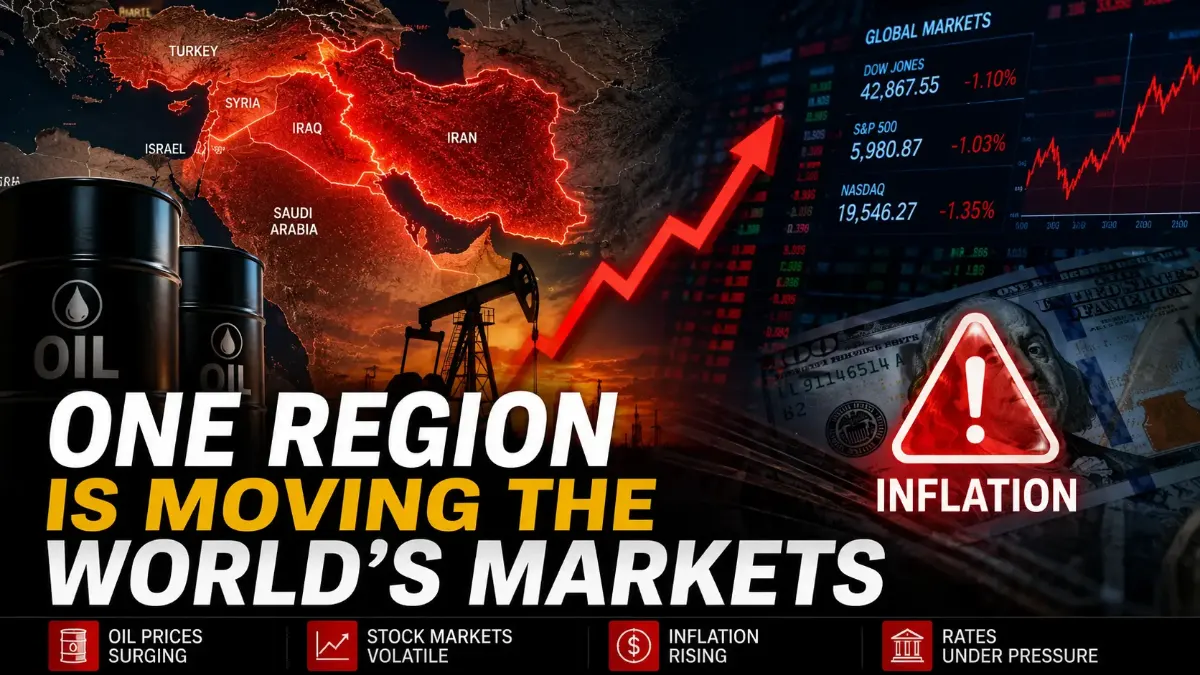
For most of 2026, investors have been focused on inflation, artificial intelligence, and central-bank policy.
But in recent weeks, another factor has emerged as one of the most important forces in global markets:
The Middle East.
What happens in the region is no longer viewed as a local issue. Financial markets now treat developments in the Middle East as a global economic risk capable of influencing oil prices, inflation, interest rates, and stock valuations around the world.
The reason is simple.
The modern global economy still runs on energy.
And a large portion of that energy flows through one of the most geopolitically sensitive regions on Earth.
Why Oil Is At The Center Of Everything
When tensions rise in the Middle East, oil markets are usually the first to react.
Traders immediately begin assessing the possibility of supply disruptions, shipping delays, or broader regional instability.
Even before actual supply interruptions occur, expectations alone can push prices higher.
This matters because oil affects nearly every part of the economy.
Higher oil prices increase:
- Transportation costs
- Manufacturing costs
- Shipping expenses
- Airline fuel costs
- Food prices
The result is inflation.
This is why recent developments have reinforced concerns raised in Why Rising Oil Prices Could Become the Biggest Inflation Threat of 2026.
Inflation Is Becoming The Next Battleground
For much of the past year, investors believed inflation was gradually moving under control.
That assumption is now being challenged.
If energy prices continue rising, central banks could find themselves facing a difficult decision.
Do they continue fighting inflation?
Or do they support slowing economic growth?
This dilemma is becoming increasingly important for policymakers across the United States, Europe, Canada, and Asia.
Recent concerns surrounding energy shortages also align with trends discussed in Why the World's Shrinking Oil Inventories Could Trigger the Next Inflation Shock.
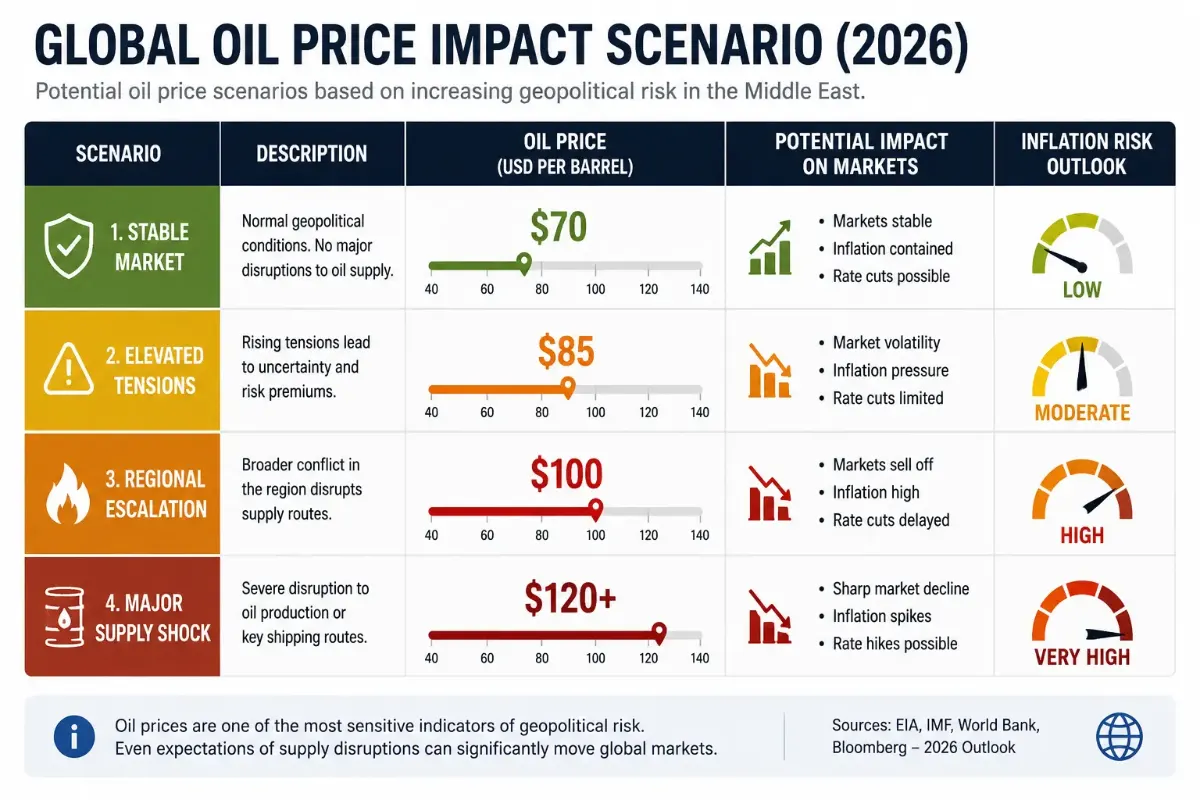
Why Interest Rates Are Suddenly A Bigger Story
Higher inflation usually means higher interest rates.
Or at the very least, fewer rate cuts.
Markets entered 2026 expecting central banks to gradually ease monetary policy.
That outlook has become far less certain.
Strong economic data combined with energy-driven inflation risks are forcing investors to reconsider previous assumptions.
The shift became particularly visible after recent employment reports, which we covered in Strong Jobs Data Just Changed the Market's Biggest Assumption.
Today, traders are increasingly discussing whether rates could remain elevated for much longer than expected.
Why Stock Markets Care
Stock markets dislike uncertainty.
And geopolitical risk creates plenty of it.
When investors become uncertain about inflation, interest rates, and economic growth, they often reduce risk exposure.
This can pressure:
- Technology stocks
- Growth companies
- Small-cap stocks
- Emerging markets
Meanwhile, sectors such as energy, defense, and commodities often attract more attention.
Recent volatility in technology stocks has also raised questions explored in Is the AI Stock Boom Finally Running Out of Steam?.
Housing Markets Could Feel The Impact
One often-overlooked consequence of geopolitical instability is its effect on housing.
If inflation remains elevated because of energy costs, central banks may keep borrowing costs higher.
Higher borrowing costs generally translate into:
- More expensive mortgages
- Lower housing affordability
- Reduced housing demand
Countries already struggling with affordability may feel additional pressure.
Canada is one example.
As discussed in Why Canada's Housing Market Could Be Heading Into Its Most Challenging Year Yet, housing markets are particularly sensitive to interest-rate expectations.
Why This Matters To Ordinary People
Many people assume geopolitical conflicts only matter to investors.
The reality is different.
The consequences eventually reach households through:
- Higher fuel costs
- More expensive groceries
- Increased utility bills
- Higher mortgage payments
- Reduced investment returns
In other words, global events can directly influence personal finances.
For households trying to build wealth, these developments affect savings, investing, retirement planning, and long-term financial security.
Readers interested in long-term financial resilience may also find value in How Much Money Do You Need to Retire Comfortably in 2026?.
The Bigger Picture
Markets often focus on immediate headlines.
However, the larger story is about uncertainty.
The Middle East is influencing:
- Oil prices
- Inflation expectations
- Interest-rate forecasts
- Stock-market valuations
- Housing affordability
Few regions currently have as much influence over so many economic variables simultaneously.
Whether tensions ease or escalate, investors will continue monitoring developments closely.
Because in 2026, understanding global markets increasingly means understanding what is happening in the Middle East.
Bottom Line
The Middle East has become one of the most important drivers of global financial markets in 2026.
Through its influence on energy prices, inflation, and interest rates, developments in the region are affecting everything from stock portfolios to mortgage payments.
While no one can predict future events with certainty, one thing is clear:
The global economy remains deeply connected to what happens in one of the world's most strategically important regions.