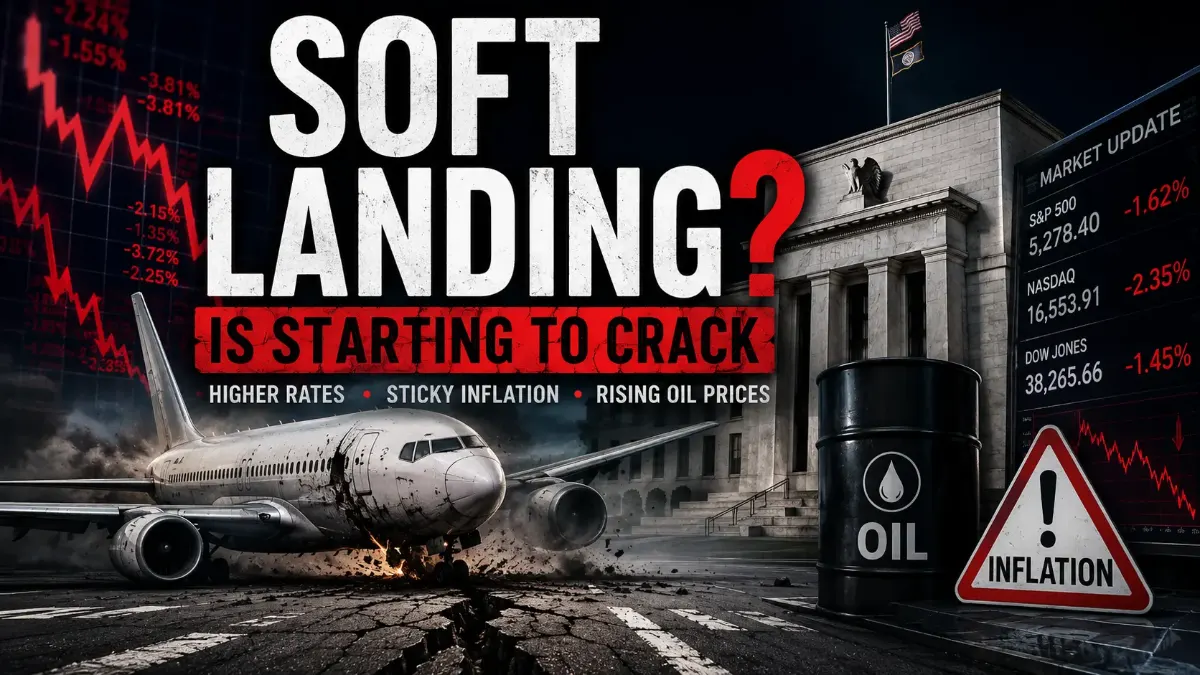
For much of the past year, financial markets have been built around a simple assumption:
The economy would slow down just enough to bring inflation under control, but not enough to trigger a recession.
Economists call this a "soft landing."
Investors embraced the idea.
Stock markets rallied.
Technology shares surged.
Risk appetite returned.
And many believed central banks would soon begin cutting interest rates.
Now that confidence is beginning to crack.
Recent economic data has created a difficult question for investors:
What if the economy isn't heading toward a soft landing at all?
What Is a Soft Landing?
A soft landing occurs when central banks successfully reduce inflation without causing a major economic downturn.
In theory, it sounds ideal.
Inflation falls.
Employment remains strong.
Consumers continue spending.
Businesses continue investing.
Financial markets remain stable.
For most of 2025 and early 2026, investors believed this outcome was becoming increasingly likely.
That belief helped fuel major gains across global stock markets.
Why Investors Are Becoming Less Confident
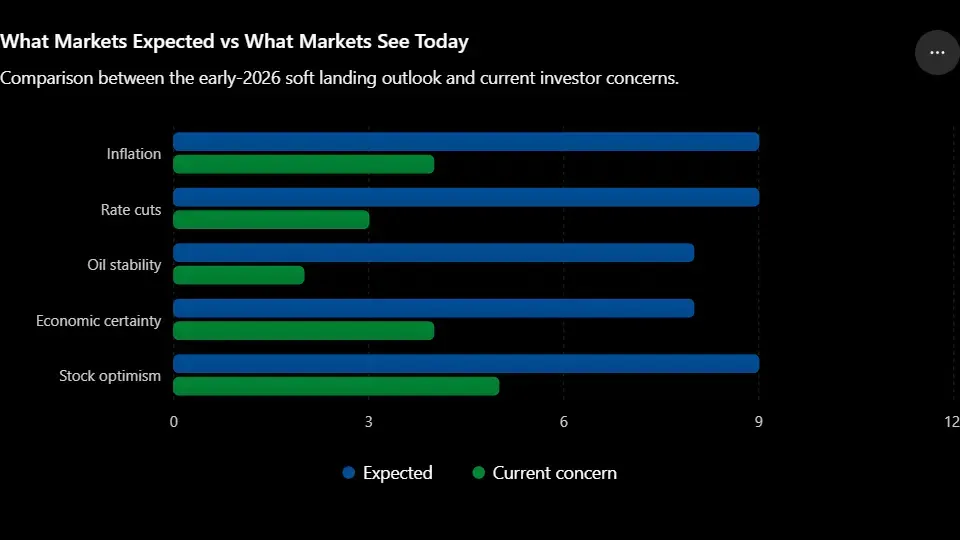
The problem is that the latest economic data is sending mixed signals.
Employment remains surprisingly resilient.
Consumer spending remains relatively healthy.
At the same time, inflation pressures have not disappeared.
Strong labor markets normally sound like good news.
However, they also create a challenge for central banks.
If economic activity remains too strong, inflation can remain elevated.
That means interest rates may need to stay higher for longer.
Those concerns intensified after the latest employment figures discussed in Strong Jobs Data Just Changed the Market's Biggest Assumption.
Markets that once expected aggressive rate cuts are now becoming more cautious.
Oil Prices Are Complicating The Picture
Inflation is not only being driven by domestic economic activity.
Energy prices are creating additional uncertainty.
The Middle East remains one of the biggest variables facing global markets in 2026.
Any disruption to energy supplies can quickly increase costs throughout the economy.
Higher oil prices affect:
- Transportation
- Manufacturing
- Food production
- Consumer prices
These pressures make inflation harder to control.
This risk has become increasingly important following developments covered in Why Rising Oil Prices Could Become the Biggest Inflation Threat of 2026.
Why Higher Rates Matter To Stocks
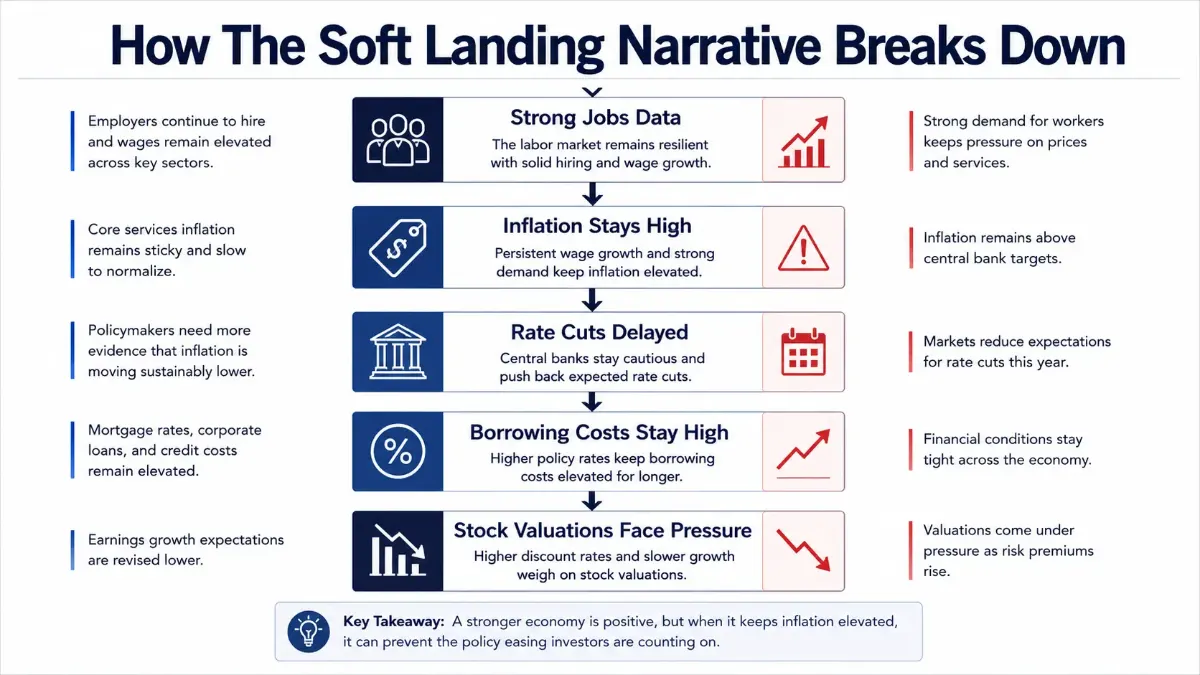
For investors, interest rates influence almost everything.
When rates remain elevated:
- Borrowing becomes more expensive
- Corporate profits face pressure
- Housing activity slows
- Risk assets become less attractive
Growth stocks are particularly sensitive.
Many of the market's biggest winners over the last two years have benefited from expectations that borrowing costs would eventually fall.
If those expectations prove incorrect, valuations may face increasing scrutiny.
The AI Rally Faces A New Challenge
Artificial intelligence has been one of the most powerful themes in global markets.
Companies linked to AI infrastructure, semiconductors, and cloud computing have generated enormous investor enthusiasm.
However, higher interest rates could create a new challenge.
Many technology valuations rely heavily on future growth expectations.
When rates stay elevated, future earnings become less valuable in today's dollars.
This is one reason some investors have begun asking questions raised in Is the AI Stock Boom Finally Running Out of Steam?.
The issue is not necessarily AI itself.
The issue is valuation.
Housing Markets Are Watching Closely
Housing is another sector heavily influenced by interest rates.
Mortgage costs remain elevated across much of the developed world.
If central banks keep rates higher for longer, housing affordability could remain under pressure.
Countries already facing affordability challenges may find conditions becoming even more difficult.
Recent trends in Canada highlight this concern and are explored further in Why Canada's Housing Market Could Be Heading Into Its Most Challenging Year Yet.
What Investors Are Watching Next
Markets are now focused on three key questions:
1. Will Inflation Continue Falling?
If inflation resumes its downward trend, central banks may regain flexibility.
If inflation remains stubborn, policy easing could be delayed.
2. Can Economic Growth Remain Stable?
Investors want growth strong enough to avoid recession but weak enough to reduce inflation pressures.
That balance is difficult to achieve.
3. Will Energy Markets Remain Calm?
Energy remains one of the biggest wildcards.
A major oil-price shock could quickly change inflation forecasts around the world.
Why This Matters Beyond Wall Street
The soft landing debate is not just a financial-market story.
It affects ordinary households as well.
Interest-rate decisions influence:
- Mortgage payments
- Car loans
- Credit card costs
- Business investment
- Employment opportunities
In many ways, the outcome will shape the financial environment people face over the next several years.
For individuals focused on long-term financial planning, these developments may also affect retirement savings, investment returns, and wealth-building strategies discussed in How Much Money Do You Need to Retire Comfortably in 2026?.
The Bottom Line
For much of the past year, markets confidently expected a soft landing.
Today, that confidence is being tested.
Strong economic data, persistent inflation risks, and uncertainty in energy markets are forcing investors to reconsider whether the path ahead will be as smooth as previously expected.
The soft landing narrative is not dead.
But for the first time in months, investors are beginning to question it.
And in financial markets, changing expectations can sometimes matter more than the actual data itself.