For decades, earning a six-figure salary was considered a sign of financial success.
Crossing the $100,000 mark meant you had joined a relatively small group of high earners and could enjoy a comfortable lifestyle in most parts of the United States.
But America has changed.
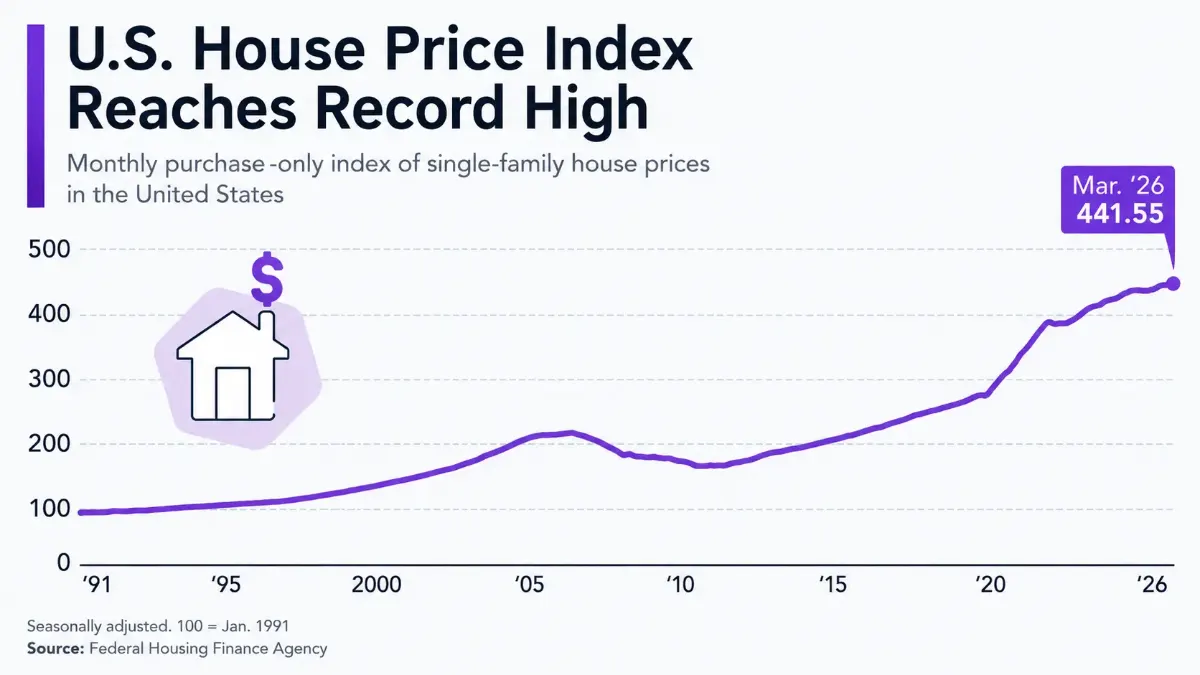
Housing costs have surged.
Healthcare expenses continue to rise.
College tuition remains expensive.
Inflation has reshaped household budgets.
As a result, many Americans who earn $100,000 or even $150,000 per year no longer feel wealthy.
This raises an increasingly common question:
What salary is actually considered rich in America in 2026?
The answer depends on where you live, your family size, your debt levels, and your financial goals.
However, there are some clear benchmarks that can help put things into perspective.
Quick Answer
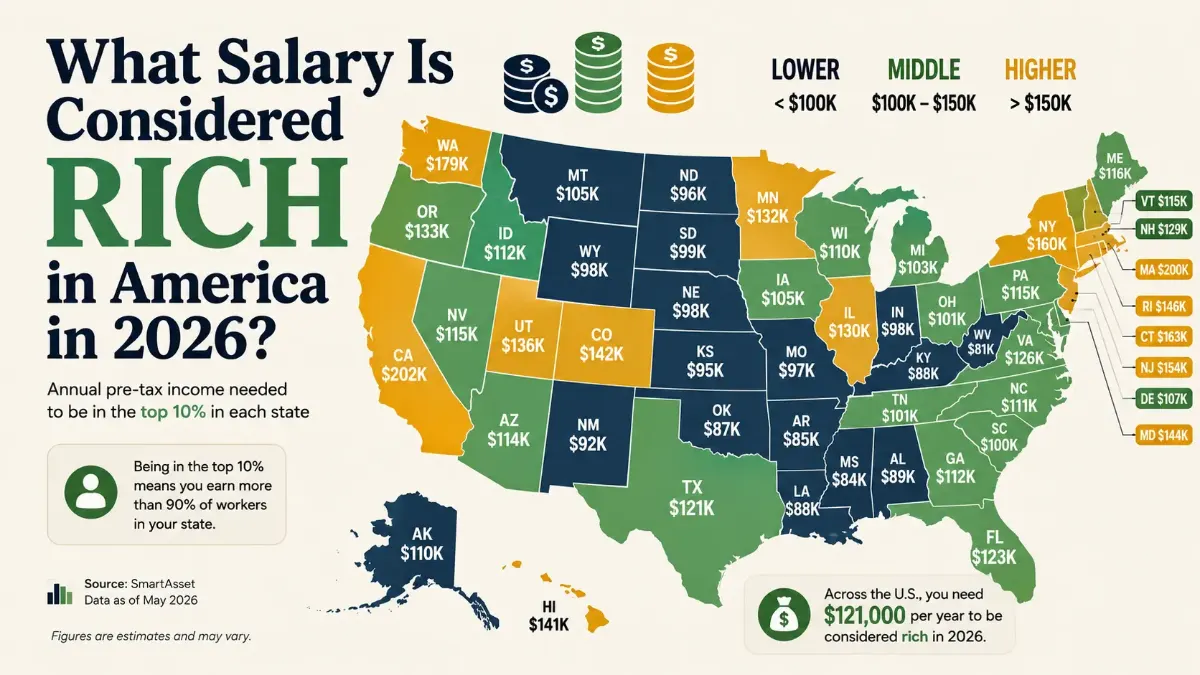
For most Americans, a household income of $250,000 to $500,000 per year is generally considered rich in 2026.
In expensive cities such as New York, San Francisco, Los Angeles, Seattle, and Boston, the threshold may be significantly higher.
Meanwhile, in lower-cost regions of the country, a household earning $200,000 may already enjoy a lifestyle many would consider wealthy.
However, income alone does not tell the entire story.
Wealth is often determined by what you keep rather than what you earn.
That is why many financial experts focus on net worth alongside salary.
For a deeper look at wealth benchmarks, see What Net Worth Makes You Upper Middle Class in 2026?.
Why $100,000 No Longer Feels Rich
For years, earning $100,000 represented a major financial milestone.
Today, that figure simply does not stretch as far.
Several factors have contributed:
- Higher housing costs
- Rising healthcare expenses
- Inflation
- Increased childcare costs
- Higher insurance premiums
- Growing education expenses
A family earning $100,000 in a major metropolitan area may find that much of their income goes toward necessities.
In contrast, the same income in a lower-cost city could provide a significantly more comfortable lifestyle.
This explains why perceptions of wealth vary so widely across the country.
Income vs Wealth
Many people confuse income with wealth.
The two are related but very different.
Income is what you earn.
Wealth is what you own.
Consider two households:
Household A earns $300,000 per year but spends nearly everything.
Household B earns $150,000 per year but saves aggressively and invests consistently.
After a decade, Household B could have a much higher net worth.
This is why building assets matters.
A high income creates opportunities.
Wealth creates financial freedom.
What Income Puts You in the Top Earners?
While exact numbers change every year, households earning approximately:
- Top 50%: $80,000+
- Top 25%: $150,000+
- Top 10%: $250,000+
- Top 5%: $350,000+
- Top 1%: $800,000+
are generally considered among the highest earners in America.
Crossing into the top 10% often marks the point where many people begin describing a household as rich.
However, local costs matter.
A top-10% income in Texas may provide a dramatically different lifestyle than the same income in California.
The Geography of Wealth
America is not a single economic market.
Living costs vary enormously.
A $250,000 income in:
- Oklahoma
- Tennessee
- Indiana
- Alabama
can support a very affluent lifestyle.
The same income in:
- San Francisco
- Manhattan
- Silicon Valley
- Los Angeles
may feel far less impressive.
This is one reason national salary benchmarks should always be viewed alongside local affordability.
Housing remains one of the biggest drivers of these differences.
Many developed countries are experiencing similar challenges. We recently explored this trend in Why Canada's Housing Market Could Be Heading Into Its Most Challenging Year Yet.
What Rich People Actually Own
When people imagine wealth, they often think about luxury cars and expensive vacations.
In reality, many wealthy households focus on assets.
Common characteristics include:
- Significant home equity
- Large retirement accounts
- Investment portfolios
- Business ownership
- Diversified income sources
The goal is not simply spending more.
The goal is creating financial flexibility and long-term security.
Inflation Has Changed Wealth Targets
Inflation has had a major impact on perceptions of wealth.
A salary that seemed extraordinary twenty years ago may now feel merely comfortable.
Rising costs have affected:
- Housing
- Groceries
- Transportation
- Energy
- Insurance
- Healthcare
Energy prices remain particularly important.
As discussed in Why Rising Oil Prices Could Become the Biggest Inflation Threat of 2026, higher energy costs can ripple throughout the entire economy.
This means that the income required to maintain a wealthy lifestyle continues to rise over time.
How Much Should You Have Saved?
Income is only one part of financial success.
Savings and investments matter just as much.
Financial planners often recommend:
- Emergency fund covering 6–12 months
- Retirement contributions every year
- Diversified investments
- Long-term wealth-building strategy
For younger professionals, the ability to save consistently may be more important than reaching a specific income target.
Can You Feel Rich Without Being Rich?
Interestingly, many high earners do not consider themselves wealthy.
Research consistently shows that people compare themselves to those around them.
A household earning $250,000 may feel affluent in one neighborhood and average in another.
This phenomenon is especially common in expensive metropolitan areas.
Lifestyle inflation also plays a role.
As income rises, spending often rises alongside it.
The result is that many people never truly feel rich regardless of how much they earn.
What Salary Creates Financial Freedom?
Financial freedom is often a better goal than chasing a specific income.
A financially free household typically:
- Has minimal high-interest debt
- Saves regularly
- Invests consistently
- Maintains emergency reserves
- Has flexibility in career choices
For many Americans, achieving financial freedom requires far less than becoming ultra-wealthy.
Calculate Your Own Situation
Income means little without context.
A salary that feels wealthy in one city may feel average in another.
To better understand your financial position, explore:
- Toronto Salary Calculator
- Cost of Living Calculator
These tools can help compare income against living costs and long-term financial goals.
The Bottom Line
In 2026, being rich in America is about far more than earning six figures.
For many households, true wealth begins around $250,000 to $500,000 in annual income, though location and lifestyle play major roles.
More importantly, wealth is not defined solely by salary.
Savings, investments, home equity, and financial security often matter far more.
The households that build lasting wealth are rarely the ones focused only on income.
They are the ones focused on keeping, growing, and protecting what they earn.
Ultimately, the richest households are not always those with the highest salaries.
They are the ones with the greatest financial freedom.