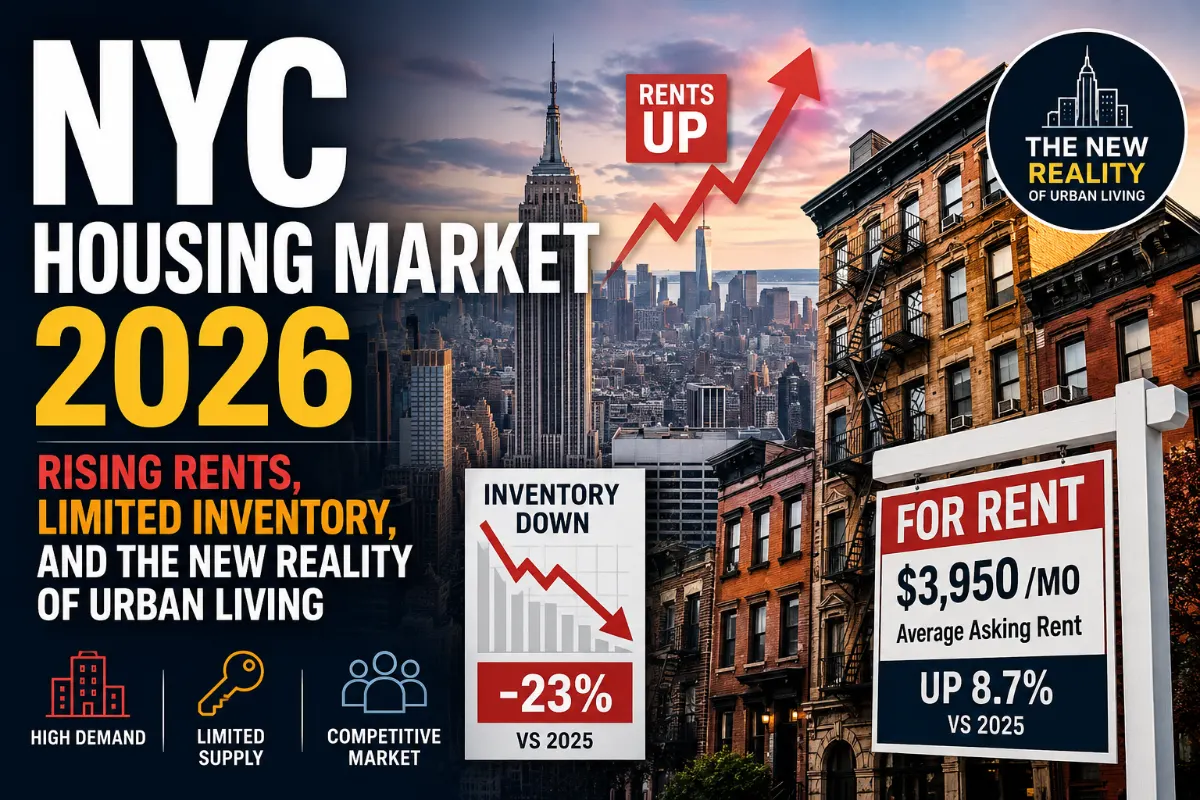
Housing has always been the largest expense for most New Yorkers, but in 2026, the city's real estate market has become even more challenging to navigate. Whether you're searching for an apartment, considering a home purchase, or simply trying to understand where the market is headed, one theme dominates every conversation: scarcity.
A combination of limited housing inventory, elevated mortgage rates, and persistent demand has created one of the tightest housing markets New York City has experienced in years. The result is a city where renters are holding onto apartments longer than ever, homebuyers face record-high prices, and affordability remains a growing concern across all five boroughs.
For individuals evaluating relocation costs or comparing major cities, a cost of living calculator can provide valuable context for understanding how housing expenses fit into a broader household budget.
The Rental Market: The Era of "Staying Put"
The defining story of New York City's rental market in 2026 is not rapid movement—it's the lack of it.
Traditionally, apartment turnover helped create opportunities for new renters entering the market. Today, however, many tenants have little incentive to move. High mortgage rates continue to discourage potential homebuyers, while economic uncertainty has made many households cautious about taking on larger housing expenses.
As a result, lease renewals have reached unusually high levels. Existing tenants are choosing stability over risk, creating what many housing analysts have begun calling "The Great Staying Put."
This behavior has dramatically reduced available inventory. In Manhattan, the vacancy rate has fallen to just 1.55%, marking its lowest level in six years. With so few apartments becoming available, competition for open units remains intense, particularly during the peak spring and summer leasing seasons.
An interesting shift has also emerged in the type of apartments renters are targeting. For decades, older pre-war buildings represented the affordable alternative to luxury developments. However, surging demand for these traditionally lower-cost apartments has pushed rents upward so aggressively that many newly constructed luxury buildings are beginning to appear relatively competitive.
Developers and landlords of high-end properties are increasingly using concessions—such as free rent periods or reduced upfront fees—to attract tenants, narrowing the effective price gap between older walk-ups and modern amenity-rich towers.
Rents Reach New Records Across the City
Despite hopes that rent growth would moderate, housing costs continue to climb throughout New York City.
Manhattan's median monthly rent has now surpassed the $5,099 threshold, establishing another record for the borough. The breakdown by apartment size illustrates just how expensive even modest living spaces have become:
Studio apartments average approximately $4,103 per month
One-bedroom apartments average approximately $5,161 per month
Two-bedroom apartments average approximately $6,948 per month
While Manhattan remains the city's most expensive rental market, Brooklyn is not far behind. Median rents in Brooklyn have reached roughly $4,110 per month, reflecting continued demand from residents seeking more space without leaving the city altogether.
Queens continues to attract renters looking for somewhat greater affordability, but price pressures have spread throughout the borough as well.
Depending on the data source, citywide rents have increased between 2.6% and 5.8% year-over-year. What's particularly notable is that New York's rent growth significantly exceeds national trends. While many metropolitan areas across the United States have experienced flat or even declining rents, New York continues to operate in a supply-constrained environment that keeps upward pressure on prices.
Readers interested in the broader affordability picture may also find value in exploring how much salary is needed to live comfortably in New York City in 2026
Homebuyers Face a Locked-Up Market
The challenges facing renters are mirrored in the city's housing sales market.
The primary issue is what economists call the "lock-in effect." Many homeowners secured mortgage rates below 4% during the low-interest-rate era of 2020 through 2022. Selling today would require replacing those loans with significantly more expensive financing, creating a strong incentive to remain in place.
This reluctance to sell has severely restricted housing inventory, even as demand remains relatively healthy. Fewer homes are changing hands, but prices continue rising because buyers are competing for a limited number of available properties.
Across New York City, median home values now range between approximately $795,000 and $818,000, representing annual gains of roughly 4% to 6%.
In Manhattan, the median home price remains near $1.3 million, underscoring the borough's position as one of the most expensive residential markets in the world.
The average property spends around 53 days on the market before going under contract, though desirable neighborhoods and competitively priced properties often sell much faster.
Why Renting Is Becoming a Long-Term Lifestyle Choice
Perhaps the most significant structural shift occurring in 2026 is the changing perception of renting itself.
Historically, renting was often viewed as a temporary stage before homeownership. For a growing share of New Yorkers, that pathway has become increasingly difficult to achieve.
High purchase prices, elevated interest rates, rising property taxes, and substantial down payment requirements have pushed homeownership beyond the reach of many middle-income households. As a result, renting is evolving from a transitional housing solution into a long-term lifestyle choice.
This trend mirrors affordability pressures seen elsewhere. For example, concerns about housing accessibility have also become a major topic in Canada's increasingly challenging housing market
This shift is also changing what renters expect from apartment buildings. Increasingly, residents are willing to pay premiums for properties that offer what could be described as "lifestyle infrastructure"—shared workspaces, fitness centers, rooftop lounges, package management systems, and other amenities that reduce the need for additional spending outside the building.
In a city where housing already consumes a substantial share of household income, buildings that help residents consolidate multiple expenses under one roof are gaining a competitive advantage.
Housing Costs and Personal Wealth
The impact of housing extends far beyond monthly rent payments. Housing affordability directly affects an individual's ability to save, invest, and build long-term wealth.
When a large percentage of income goes toward housing, it becomes significantly harder to accumulate assets or increase overall financial security. This is one reason why understanding what net worth makes you upper middle class in 2026 has become increasingly relevant for households living in expensive metropolitan areas.
Similarly, rising housing expenses can contribute to lifestyle inflation that slows wealth accumulation even among high-income earners.
The Bottom Line
The New York City housing market in 2026 remains defined by one fundamental challenge: there simply are not enough available homes to meet demand.
Whether renting or buying, New Yorkers are navigating an environment characterized by historically low inventory, elevated prices, and limited affordability. Mortgage-rate lock-in has frozen much of the sales market, while renters' reluctance to move has intensified competition for available apartments.
Until housing supply expands meaningfully or borrowing costs fall significantly, the city's housing market is likely to remain one of the most expensive and competitive in the United States. For many residents, adapting to higher costs—and rethinking long-held assumptions about homeownership—has become the new reality of living in New York City.
Anyone evaluating the long-term financial impact of living in a high-cost city should periodically review both their spending patterns and overall financial position using a net worth calculatorto ensure housing costs remain aligned with broader wealth-building goals