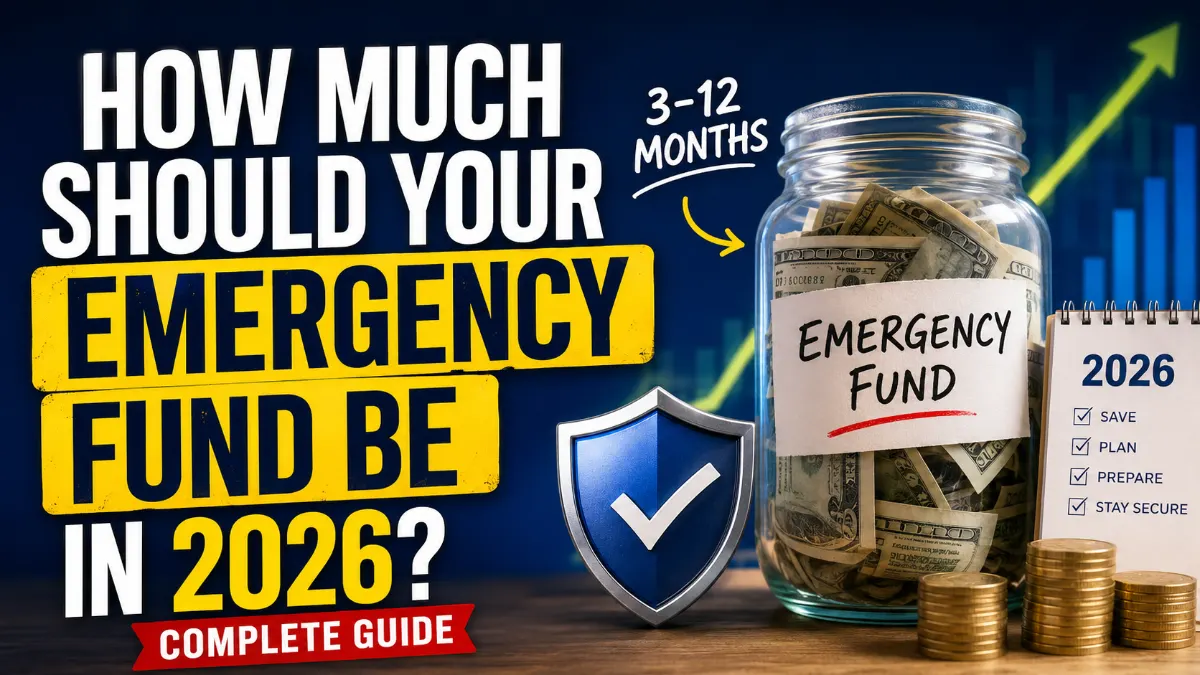
How Much Should Your Emergency Fund Be in 2026? (Complete Guide)
Unexpected expenses can happen at any time. A job loss, medical emergency, major car repair, home maintenance issue, or family crisis can quickly put your finances under pressure. Without adequate savings, many people rely on high-interest credit cards or personal loans, creating long-term financial stress.
An emergency fund acts as your financial safety net. It gives you the confidence to handle life's surprises without disrupting your long-term financial goals or investment strategy.
In 2026, building an emergency fund is more important than ever. Although inflation has eased compared to previous years, living costs remain elevated in many countries. Economic uncertainty, technological disruption, changing job markets, and fluctuating interest rates mean households should prioritize financial resilience before pursuing aggressive investments.
Whether you're just starting your financial journey or already investing for retirement, this guide explains exactly how much emergency savings you need, where to keep your money, and practical strategies to build your fund faster
What Is an Emergency Fund?
An emergency fund is money set aside specifically for unexpected financial emergencies—not for vacations, shopping, or planned purchases.
Its primary purpose is to provide immediate access to cash when unexpected events occur.
Examples include:
Job loss
Medical expenses
Major home repairs
Vehicle breakdowns
Emergency travel
Family emergencies
Temporary income reduction
Because these situations are unpredictable, your emergency fund should always be easily accessible and stored in a secure, low-risk account
Why Emergency Funds Matter More Than Ever in 2026
The financial landscape continues to evolve rapidly. Many households face:
Higher housing costs
Increased insurance premiums
Rising healthcare expenses
More frequent layoffs in certain industries
Greater reliance on freelance or contract work
Economic uncertainty from global events
Even investors with diversified portfolios may be forced to sell investments during a market downturn if they don't have enough emergency cash.
A properly funded emergency reserve allows you to:
Avoid unnecessary debt
Continue investing during market volatility
Protect your retirement savings
Reduce financial stress
Make better long-term financial decisions
Think of your emergency fund as insurance for your financial life
How Much Emergency Savings Do You Actually Need?
Financial experts generally recommend saving between three and twelve months of essential living expenses.
The exact amount depends on your income stability, family size, career, and financial responsibilities.
General Recommendation
| Situation | Recommended Savings |
|---|---|
| Stable full-time employment | 3 months |
| Dual-income household | 3–6 months |
| Self-employed | 6–9 months |
| Freelancer | 6–12 months |
| Business owner | 9–12 months |
| Single-income family | 6–12 months |
| Retiree | 12 months |
Rather than focusing on total income, calculate your essential monthly expenses, including:
Housing
Utilities
Food
Insurance
Transportation
Healthcare
Loan payments
Childcare
Basic household expenses
Multiply this amount by the number of months you want to cover
3 Months vs. 6 Months vs. 12 Months
There isn't a one-size-fits-all answer. The right emergency fund depends on your financial circumstances.
Three Months
Suitable for:
Government employees
Stable salaried workers
Dual-income households
Individuals with low debt
Advantages
Faster to build
Lower opportunity cost
Allows more investing
Disadvantages
Limited protection during prolonged unemployment
Six Months
Ideal for:
Most families
Homeowners
Parents
Professionals with variable bonuses
Advantages
Better financial security
More flexibility
Greater peace of mind
Twelve Months
Recommended for:
Entrepreneurs
Freelancers
Commission-based workers
Individuals approaching retirement
Advantages
Maximum financial protection
Reduced dependence on credit
Greater resilience during economic downturns
The trade-off is that more cash remains in low-return accounts rather than being invested
Where Should You Keep Your Emergency Fund?
Safety and accessibility are more important than maximizing returns
Best Places to Store Emergency Savings
| Account Type | Liquidity | Risk | Best For |
|---|---|---|---|
| High-yield savings account | Excellent | Very Low | Most people |
| Money market account | Excellent | Very Low | Larger balances |
| Short-term CDs | Moderate | Very Low | Portion of savings |
| Treasury bills | Good | Very Low | Conservative investors |
| Regular savings account | Excellent | Very Low | Beginners |
Avoid storing your emergency fund in:
Stocks
Cryptocurrency
Long-term bonds
Real estate
High-risk investments
An emergency fund should be available immediately when you need it
Should You Invest Your Emergency Fund?
One of the most common financial mistakes is investing money intended for emergencies.
While investing generally produces higher long-term returns, market declines can occur precisely when you need cash most.
Imagine losing your job during a recession while your investment portfolio has fallen 30%. Selling investments at a loss to cover living expenses can permanently reduce your long-term wealth.
Instead:
Keep emergency savings separate.
Invest only money you won't need for several years.
Build your emergency reserve before increasing investment risk.
Doing so creates a stronger financial foundation and helps you stay invested during market downturns rather than selling in panic
How Inflation Affects Emergency Savings
Inflation gradually reduces the purchasing power of cash. While this means your emergency fund may lose some value over time, it doesn't mean you should invest all of it.
Instead, review your emergency fund annually. If your monthly living expenses increase due to inflation, adjust your savings target accordingly.
For example, if your essential monthly expenses rise from $3,000 to $3,400, a six-month emergency fund increases from $18,000 to $20,400.
This simple yearly review ensures your financial safety net keeps pace with changing costs
How to Build an Emergency Fund Faster
Building an emergency fund may seem overwhelming, especially if you're starting from zero. However, consistency is far more important than making large deposits. Even small contributions made regularly can grow into a substantial financial cushion over time.
The key is to treat your emergency fund like a monthly bill. Instead of saving whatever is left over at the end of the month, set aside a fixed amount as soon as you receive your income. This "pay yourself first" strategy helps build savings automatically
Practical Strategies to Build Your Emergency Fund
Set up automatic transfers to a dedicated savings account.
Save a fixed percentage of every paycheck.
Deposit bonuses, tax refunds, or cash gifts directly into your emergency fund.
Reduce unnecessary subscriptions and redirect those savings.
Cook at home more often instead of dining out.
Sell unused household items and save the proceeds.
Use income from freelance work or side hustles exclusively for emergency savings.
Increase your savings rate whenever you receive a raise.
Small, consistent actions often produce better long-term results than waiting until you can save large amounts
12-Month Emergency Savings Plan
The following example shows how regular monthly contributions can build a meaningful emergency funds
| Monthly Contribution | Savings After 12 Months |
|---|---|
| $100 | $1,200 |
| $250 | $3,000 |
| $500 | $6,000 |
| $750 | $9,000 |
| $1,000 | $12,000 |
If you receive occasional bonuses or extra income, reaching your target can happen much sooner
Common Emergency Fund Mistakes to Avoid
Even disciplined savers can make mistakes that reduce the effectiveness of their emergency fund.
- Investing Emergency Savings
An emergency fund is meant to provide stability, not high returns. Investing this money in stocks or cryptocurrencies exposes it to market volatility, which defeats its purpose
- Using the Fund for Non-Essential Purchases
Vacations, holiday shopping, gadgets, and luxury purchases are not emergencies.Reserve your emergency fund for genuine financial crises only
- Saving Too Little
Many people believe that saving one month's expenses is enough. While any savings are better than none, a larger reserve provides greater protection against extended unemployment or major unexpected expenses.
- Keeping Too Much Cash
Holding several years' worth of expenses in cash may reduce your long-term investment growth. Once your emergency fund reaches its target, consider investing additional savings according to your financial goals
- Forgetting to Adjust for Inflation
As living costs increase, your emergency fund should increase as well. Review your target at least once a year
Emergency Fund by Age
Savings goals often change throughout different stages of lifee
| Age Group | Recommended Emergency Fund |
|---|---|
| 20–29 | 3–6 months of expenses |
| 30–39 | 6 months of expenses |
| 40–49 | 6–9 months of expenses |
| 50–59 | 9–12 months of expenses |
| 60+ | 12 months or more |
Older individuals often benefit from maintaining a larger emergency reserve because replacing lost income or covering unexpected medical expenses can become more challenging
Emergency Fund by Income
Your savings target should be based on essential expenses rather than income alone. However, income can provide a useful guideline
| Annual Income | Emergency Fund |
|---|---|
| $30,000 | $7,500–$15,000 |
| $50,000 | $12,500–$25,000 |
| $75,000 | $18,000–$36,000 |
Emergency Fund Checklist
Use this checklist to evaluate your financial readiness.
Checklist Item
Status
I know my monthly essential expenses
☐
I have a separate emergency savings account
☐
My savings cover at least three months of expenses
☐
I contribute to my emergency fund every month
☐
My emergency fund is easily accessible
☐
I do not invest my emergency savings in risky assets
☐
I review my emergency fund annually
☐
I increase my savings target as living costs rise
☐
Aim to check every box to ensure your emergency fund is prepared for unexpected events
Frequently Asked Questions
Is three months of savings enough?
For many salaried employees with stable jobs, three months may be sufficient. Individuals with variable income or greater financial responsibilities may need six to twelve months.
Should I pay off debt before building an emergency fund?
It's generally wise to save a small emergency fund first—often $1,000 to one month's expenses—to avoid relying on credit cards for unexpected costs. After that, balance debt repayment with continued savings
Can I keep my emergency fund in a checking account?
A separate savings account is usually better. It reduces the temptation to spend while keeping the money accessible
Should couples have one emergency fund or separate ones?
Many couples maintain a shared emergency fund for household expenses while also keeping smaller personal savings accounts for individual needs.
Is cash at home part of an emergency fund?
Keeping a small amount of cash at home for short-term emergencies is reasonable, but the majority of your emergency savings should remain in a secure financial institution
What qualifies as a financial emergency?
Examples include:
Unexpected job loss
Medical emergencies
Essential home repairs
Necessary vehicle repairs
Emergency travel
Major family emergencies
Planned purchases and discretionary spending do not qualify.
Final Thoughts
An emergency fund is one of the most important building blocks of financial security. It protects you from unexpected setbacks, reduces reliance on debt, and allows you to stay focused on long-term goals such as investing, retirement planning, and wealth creation.
There is no universal savings target that fits everyone. Your ideal emergency fund depends on your income stability, monthly expenses, family responsibilities, and overall financial situation. For most people, saving between three and six months of essential expenses provides a solid foundation, while freelancers, business owners, and retirees may benefit from maintaining larger reserves.
The most important step is to start today. Even modest, consistent contributions can grow into a meaningful financial safety net over time. By automating your savings, reviewing your target annually, and resisting the temptation to use the fund for non-emergencies, you'll be better prepared for whatever life brings
🔥 Continue Your Wealth-Building Journey
Want to make sure you stay ahead of volatile financial shifts and cutting-edge tech integrations?
Explore the main Virearn platform for continuous, up-to-the-minute updates on fintech automation, global asset trends, and strategic wealth-building protocols If you find our free tools and deeply researched material valuable, please consider supporting our independent platform via our donate portal Stay ahead, stay automated, and keep your money working for you